
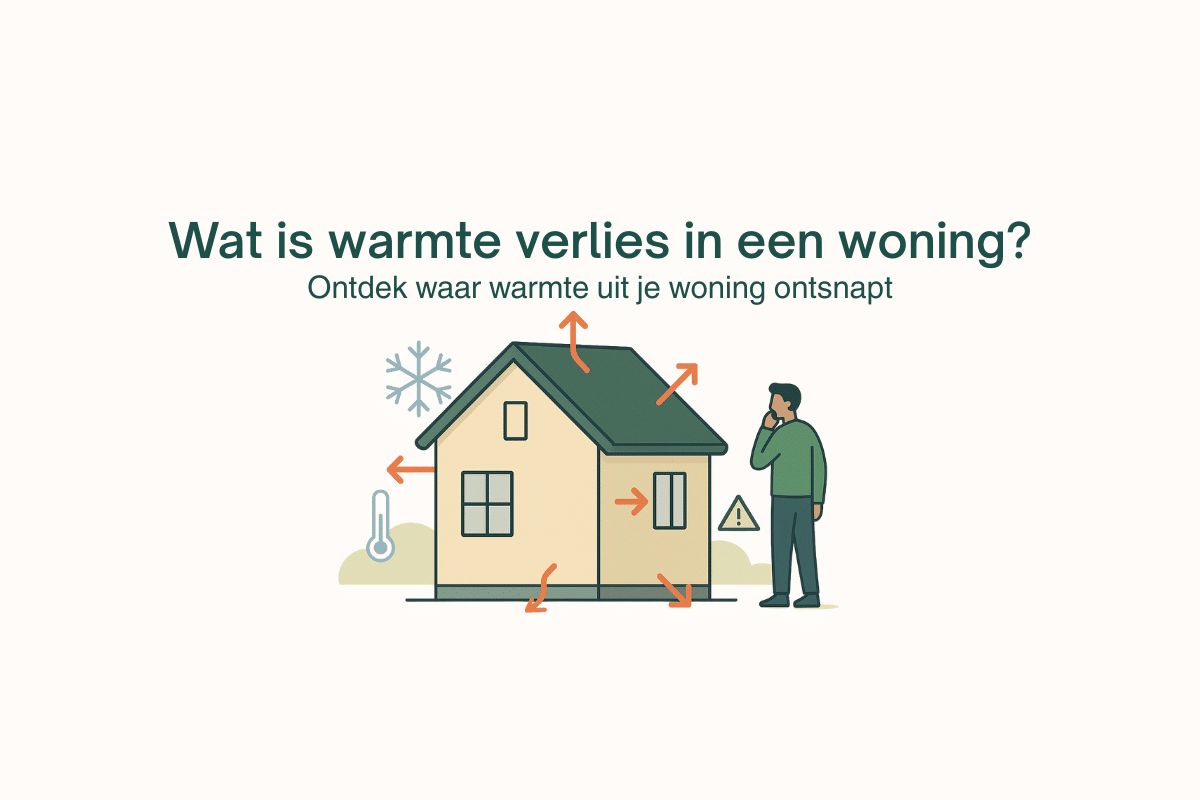
What is heat loss in a home?
Heat loss means heat escaping from your home to the outside. This mainly happens through parts of the house where insulation is inadequate or outdated. The more heat you lose, the more heating you need to keep your home comfortable.
Many homeowners notice heat loss through a home that feels cold, draughts or high energy bills, without knowing exactly where the problem lies.
Where does heat loss occur?
Heat always moves from warmer areas to colder ones. In a home, this mainly happens through:
- The roof A poorly insulated roof allows a lot of heat to escape. Roof insulation can significantly reduce this.
- The external walls and cavity walls Uninsulated walls allow heat to escape easily. Cavity wall insulation helps reduce this heat loss.
- The floor Heat escapes through the floor, particularly in homes with a crawl space. Floor insulation prevents this.
- Windows and glazing Old double glazing or single glazing is a major source of heat loss. HR++ glazing provides better insulation.
- Gaps and joints Small openings around window frames, doors and junctions cause draughts and additional heat loss.
How can you spot heat loss in your home?
Heat loss is often invisible, but you can notice its effects. Common signs include:
- A home that cools down quickly
- Cold floors or walls
- Draughts, even with the windows closed
- Large temperature differences between rooms
- Higher heating costs than expected
What are the effects of heat loss?
Persistent heat loss has several consequences:
- Higher energy costs due to increased heating use
- A less comfortable home, especially in winter
- Greater strain on your heating system
- Higher CO₂ emissions due to unnecessary energy use
In the long term, this can also affect the condition and value of your home.
What can you do to reduce heat loss?
Heat loss can be significantly reduced with targeted insulation measures, such as:
- Roof insulation
- Cavity wall insulation
- Floor insulation
- HR++ glazing
- Proper maintenance of mortar joints and junctions
Which measure will have the greatest impact depends on your home and its current level of insulation.
Frequently asked questions about heat loss
Is heat loss normal in every home? Yes, every home loses heat. In well-insulated homes, however, this loss is minimal.
Can you prevent heat loss completely? No, it cannot be prevented entirely. The aim is to minimise it.
Does an old house always lose a lot of heat? Not necessarily. Older homes may have been well insulated at a later stage. Without insulation, however, heat loss is often greater.
How do I know where the most heat is being lost? An insulation specialist can assess where the greatest losses occur and which measures will deliver the most benefit.
Personal advice from Greenisolatie
Would you like to know where your home is losing heat and what you can do about it? Greenisolatie assesses your home, provides honest advice and helps you with insulation solutions that reduce heat loss, improve comfort and lower energy costs.